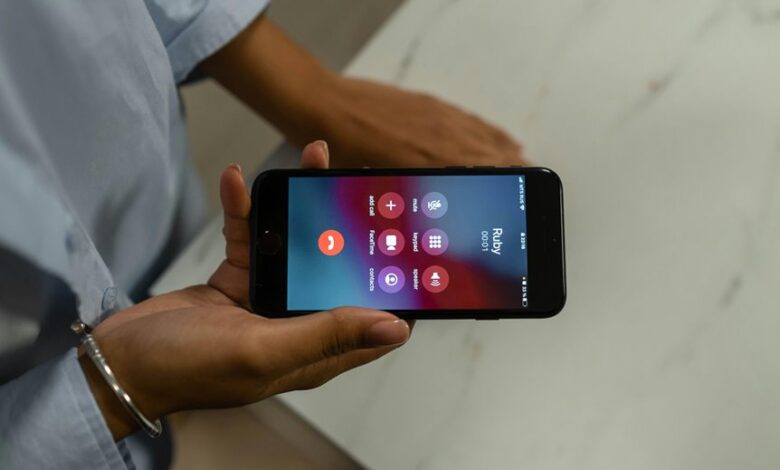
Contact Trace Explorer at 888-884-4896 frames a data-driven approach to verified caller intelligence. The system maps interactions with verifiable signals—caller metadata, device fingerprints, corroborated histories—and uses them to drive risk scoring and routing decisions. It emphasizes accountability, privacy safeguards, and data minimization, documenting decisions for traceability from intake to response. The framework promises faster verification cycles and reduced false positives, while leaving critical reliability questions unresolved and warranting further scrutiny.
What Is Contact Trace Explorer and Why It Matters
Contact Trace Explorer (CTE) is a data-driven tool designed to identify and map caller interactions within a tracing workflow.
What is contact? It centers on structured signals and provenance, enabling visibility across nodes.
Why it matters: it reduces ambiguity, supports accountability, and strengthens decision-making.


Verify callers and harness trusted intelligence to optimize routing, risk assessment, and overall operational clarity.
How to Verify Callers Quickly With Trusted Intelligence
To verify callers quickly with trusted intelligence, organizations implement a structured triage workflow that anchors identity validation to verifiable signals such as caller metadata, device fingerprints, and corroborated contact histories. This approach yields measurable outcomes: reduced false positives, faster verification cycles, and clear accountability trails. Key metrics include caller verification rates and the quality of trusted intelligence driving decisions.
Best Practices for Handling Sensitive Data and Privacy
As organizations scale their caller intelligence programs, safeguarding sensitive data and protecting privacy become integral to operational credibility and regulatory compliance. The analysis emphasizes verification workflows and validation workflows to ensure accurate identity assessment. Privacy safeguards enforce access controls and audit trails. Data minimization curtails unnecessary collection, storage, and processing, supporting risk reduction while preserving functional freedom and transparent accountability for all stakeholders.
Deploying a Robust Workflow: From Intake to Response Outcomes
Deploying a robust workflow requires a structured sequence from intake to outcome assessment, ensuring consistency, traceability, and measurable performance. The analysis emphasizes contact tracing efficiency, standardized data validation, and continuous quality checks. A clear risk scoring framework guides prioritization while privacy safeguards ensure compliant handling. Systematic feedback loops enable rapid course corrections, documenting decisions and outcomes for transparent accountability.
Conclusion
Conclusion: The Contact Trace Explorer functions as a lattice of verifiable signals, weaving caller metadata, device fingerprints, and corroborated histories into a disciplined risk score. From intake to response, decisions unfold like a calibrated machine, each node traceable and auditable. Privacy is preserved through data minimization and access controls, while feedback loops tighten accuracy. In this data-driven fabric, trusted intelligence illuminates routing, reduces false positives, and accelerates verified outcomes with systematic, measurable precision.