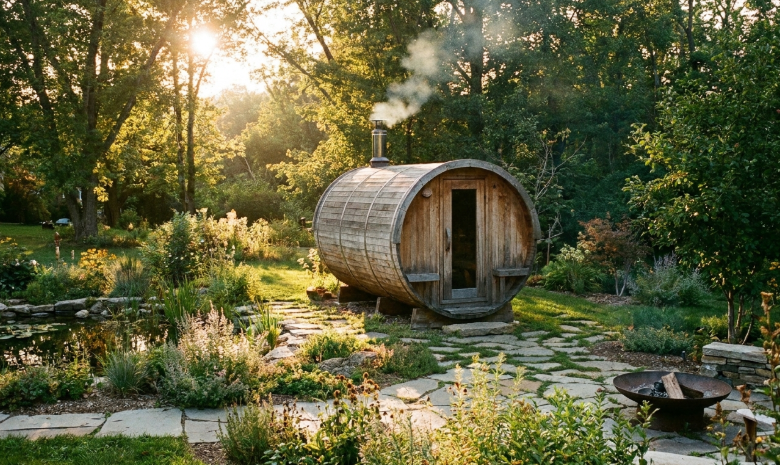
A barrel sauna handles cold-climate winters well because its curved roof sheds snow naturally and its round shape has no long flat wall for wind to work against, but a few adjustments matter: budget 10 to 20 extra minutes for preheat, check the door seal each fall before it hardens, and clear a safe walking path to the door before the first freeze. Done right, a barrel sauna in a small backyard is one of the more forgiving outdoor structures to run through a full winter season.
What Actually Changes About a Barrel Sauna in Winter
The core structure does not change: curved cedar staves, a rounded roof, and a heater sized to the interior volume all work the same way regardless of season. What changes is how hard that heater has to work and how much attention the exterior needs. Cold-soaked wood pulls heat out of the interior air faster until the staves themselves warm up, and any gaps in the door seal that were unnoticeable in October become a real draft by January. None of this makes a barrel sauna impractical for cold climates; it just shifts a few maintenance habits from occasional to seasonal.
Preheat Times Get Longer, Budget For It
In mild weather, a barrel sauna with a properly sized heater often reaches operating temperature in 30 to 45 minutes. In sub-freezing conditions, add 10 to 20 minutes to that estimate, since the heater is fighting both the outdoor air temperature and the residual cold in the wood itself before the interior climbs into a comfortable range. Starting the heater on a timer or a smart plug ahead of when you actually plan to use the sauna removes the guesswork and avoids standing around in the cold waiting for it to catch up.
Protecting the Curved Roof and Staves From Snow and Ice
The barrel’s rounded roof is genuinely an advantage here, since snow slides off far more readily than it would off a flat cabin roof, reducing the load the structure has to bear through a storm. Heavy, wet snow can still accumulate along the lower curve near the eaves, so it is worth clearing occasionally by hand rather than assuming the shape handles everything on its own. Ice buildup on the staves themselves is mostly cosmetic and melts off once the heater runs, but a coat of exterior sealant applied before winter helps the wood shed moisture rather than absorbing it during repeated freeze-thaw cycles.


Keeping the Door Seal Working When Temperatures Drop
Rubber and foam door seals can stiffen in sub-freezing air, and a seal that stiffens enough can leave small gaps that let heat escape every time the sauna runs. Checking the seal each fall, before the first hard freeze, and replacing it if it looks cracked or compressed is a cheap fix that pays for itself quickly in reduced heater run time over a winter of regular use.
Managing Condensation and Moisture in Cold Weather
The temperature swing between a hot interior and freezing exterior air makes condensation more noticeable in winter than in other seasons, particularly around the door frame and any windows. Cracking the door or a vent for a few minutes after each session lets built-up humidity escape before it has a chance to settle into the wood and freeze overnight. Skipping this step through an entire winter is one of the more common ways an otherwise well-built barrel sauna develops soft spots in the staves a few years earlier than it should.
Electrical Considerations for Sub-Freezing Nights
A dedicated 240-volt circuit sized for the heater should be rated for outdoor, cold-weather use, and any exposed cable runs benefit from a check each fall to confirm nothing has been nicked or worn by the elements. Heaters generally draw more power in cold conditions simply because they run longer to reach and hold temperature, so expect a modest increase in the monthly electricity cost of regular winter use compared with a mild-season baseline.
Why Winter Might Be a Good Season for Regular Use
Regular sauna use has been associated with lower rates of fatal cardiovascular events in large long-term cohort studies, and that association holds across seasons rather than being specific to summer use. A review published in Mayo Clinic Proceedings summarizing this body of research found consistent associations tied to how often someone uses a sauna rather than which time of year they use it. Many people also find that the contrast between a hot interior and cold outdoor air feels especially good in winter, though that comfort preference has not itself been isolated as a studied health benefit separate from general sauna use. Shoppers comparing compact 6-person models built for year-round backyard use in cold climates can check current listings at sweatdecks.com along with other specialty retailers before ordering.
Small-Space Placement Tips for Winter Access
In a small yard, the walking path to the sauna matters as much as the unit itself once snow starts falling. A short, direct route from the house, cleared and salted or sanded through winter, keeps the trip manageable even in bare feet or sandals for the last few steps. Keeping the barrel a bit closer to the house than you might in summer, if the yard allows it, cuts down on how much of that path needs regular clearing, which is a small tradeoff that makes daily winter use far more likely to actually happen.
A Pre-Winter Checklist Worth Ten Minutes
Before the first hard freeze, walk around the barrel with a short list in mind. Check the door seal for stiffness or cracking and swap it if it looks worn. Clear leaves and debris from around the base so nothing traps moisture against the staves once temperatures drop. Confirm the exterior sealant is still doing its job, since a coat applied two summers ago may need a refresh before winter humidity and freeze-thaw cycling start working on the wood. Inspect the electrical run for any visible wear where the cable exits the house or crosses exposed ground, and clear or mark the walking path so it is easy to keep salted or sanded once snow starts. None of these steps takes long individually, but skipping them tends to show up as a bigger repair bill by spring, whether that is a soft stave, a drafty door, or a heater that runs longer than it should to compensate for lost heat.
Frequently Asked Questions
How much longer does a barrel sauna take to heat up in winter? Expect 10 to 20 minutes longer than in mild weather, since the heater has to overcome cold soaked into the wood as well as the outdoor air.
Will snow damage the roof of a barrel sauna? Generally no. The curved roof sheds snow more effectively than a flat roof, though heavy accumulation should still be cleared occasionally.
Does cold weather affect the door seal on a barrel sauna? Yes, seals can stiffen in freezing temperatures. Check each fall and replace if cracked or compressed.
Is it safe to use a barrel sauna in freezing temperatures? Yes, this is common in cold climates. The main precautions are clearing ice from the path and moving carefully between hot and freezing air.
Does winter use offer any particular health benefit? Regular use has been associated with cardiovascular benefits in long-term studies regardless of season.
References
- Cardiovascular and Other Health Benefits of Sauna Bathing: A Review of the Evidence, Mayo Clinic Proceedings, 2018
- Effects of heat and cold on health, with special reference to Finnish sauna bathing, American Journal of Physiology – Regulatory, Integrative and Comparative Physiology, 2018
- Benefits and risks of sauna bathing, The American Journal of Medicine, 2001
By Owen Bratcher