By a commercial roofing industry contributor.
The price for a full commercial roof replacement can be shocking. It’s not just the cost of materials and labor. It’s also the mess and trouble of a “tear-off”, the process of removing the old roof down to the deck. This often means noise, trash, and possible delays for the business inside the building. Many property owners think this is their only choice when a roof starts to fail, but that is not always true.
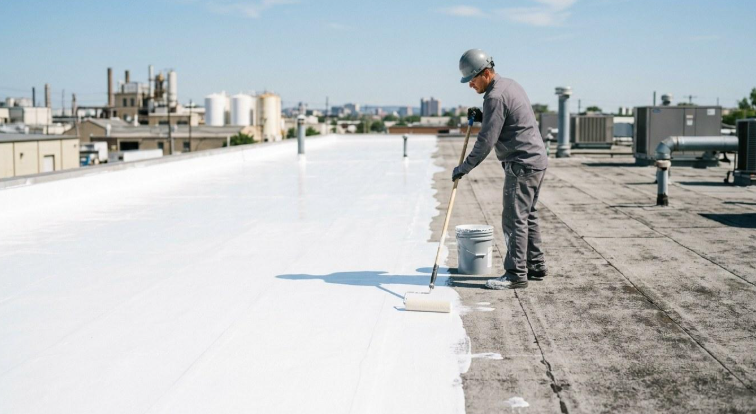
For a roof that is still strong but has a worn-out surface, a roof coating can be a much smarter choice. These liquid-applied systems create a seamless, waterproof layer right over the existing roof. This avoids the cost and waste of a tear-off. A good place to start is to explore what Denver Roof Coatings Colorado can offer to understand these options. Beyond just putting off a replacement, some coatings also create a “cool roof” that reflects sunlight. According to the U.S. Environmental Protection Agency, these reflective surfaces can lower inside temperatures and cut cooling costs by up to 50 percent.
Quick answer: A roof coating is a good option instead of a full replacement when your roof’s structure is in good condition but the surface is leaking, cracked, or worn. It saves a lot of money, adds 10 to 20 years to the roof’s life, and avoids the mess and landfill waste of a tear-off.

What’s inside
- How much can you realistically save compared to replacement?
- How can you tell if your roof is a good candidate?
- What does the inspection and application process involve?
- Frequently Asked Questions About Roof Coatings
- The Bottom Line: Is a Coating the Right Move?
How much can you realistically save compared to replacement?
You can often save a large share of your roofing costs by choosing a coating over a full replacement. The savings come from avoiding the labor and trash fees of a tear-off, while also creating long-term savings on energy bills. A full roof replacement is one of the biggest expenses a building owner will face, so knowing your options is key for budgeting.
The main reason for the high cost of a replacement is the “tear-off.” This is the process of removing and throwing away the old roofing material, and it requires a lot of work. Landfill fees, labor hours, and the price of new insulation and roofing materials add up quickly. A coating system is applied directly over the existing, cleaned roof surface. This gets rid of the tear-off step completely, which cuts down on project time and labor costs. It also keeps old roofing materials out of landfills, which is good for the environment.
Beyond the initial savings, a reflective “cool roof” coating saves you money month after month. Dark-colored roofs soak up the sun’s heat, which heats up the building and makes the air conditioning work harder. A white or light-colored coating reflects this heat. According to the same EPA release, this can reduce a building’s cooling costs by up to 50 percent. In a state with as many sunny days as Colorado, this can add up to big savings on your power bills each year.
See Also: Beyond the Rate: How to Properly Vet a Guaranteed Annuity
❝ A key rule for deciding between a coating and a replacement is the “25 percent rule.” If an infrared scan shows that more than 25 percent of the roof’s insulation underneath is wet or damaged, a full tear-off is almost always the right choice. Below that number, a coating is often a good and much cheaper option.
How can you tell if your roof is a good candidate?
A full inspection by a pro, including an infrared scan and adhesion tests, is the only way to know if your roof is good for a coating. While you can see obvious problems like cracks or bad seams, what really matters is what you can’t see: hidden moisture and whether the new coating will stick to the old roof.
A good inspection has a few steps. First is a detailed visual check and a core sample, where a small piece of the roof is cut out to check its layers. This tells them what the roof is made of and if the insulation below is okay. But the most important step is an infrared (IR) scan. An inspector uses a thermal camera, usually at sunset as the roof cools, to find spots that are different temperatures. Areas that stay warm longer show where water is trapped in the insulation, which is a big problem. If these wet areas cover more than about 25 percent of the roof, a coating is not a good choice anymore.
❝ Ask any contractor you might hire if they do a physical adhesion test. This involves putting a small test patch of the coating on your roof, letting it dry for the time the maker recommends, and then using a special tool to see how hard it is to pull off. This test proves for sure that the coating will stick to your roof, so it won’t peel or come off later.
Finally, the right coating depends on your roof type, the weather where you live, and problems like standing water. Each type has its own pros and cons. The U.S. Department of Energy says a good “cool roof” does two things: it reflects a lot of sunlight, and it quickly lets go of any heat it does soak up. Different coatings do this in different ways.
| Coating Type | Best For… | Key Strength | Main Consideration |
| Silicone | Flat roofs with ponding water | Great against water and sun damage | Slippery when wet; needs a special primer to re-coat later |
| Acrylic | Sloped metal or membrane roofs | Reflects sun well and is a good value | Gets thinner over time; not great for standing water |
| Polyurethane | High-traffic areas or roofs with chemical exposure | Very tough and resists damage | Costs more; tricky to apply and sensitive to moisture |
A good proposal does more than just suggest a product. It should have a report on your roof’s condition with photos, a map from the infrared scan, and a clear reason why they chose a certain coating system for your roof.
What does the inspection and application process involve?
The process is a careful, step-by-step system that is more like science than just painting. A good coating job depends on the prep work and details done long before the final white layer is applied. How long the coating lasts depends almost completely on these first steps.
First, the roof must be professionally cleaned, usually with a high-pressure washer. The goal is not just to remove dirt, but to get rid of any dust, rust, or loose bits that could keep the coating from sticking. After cleaning, a full inspection finds any spots that need fixing. This includes fixing bubbles, tightening loose screws, and replacing any small wet spots in the insulation that were missed in the first scan. This is a step you can’t skip; you can’t put a coating on a surface that’s already failing.
Next comes the important detail work. Every seam, pipe, and screw head is sealed. This is usually done with a thick, strong sealant or a special version of the coating material. This step waterproofs all the weakest spots on the roof before the main coating is even put on. A primer is then applied to the entire roof. This isn’t like primer for house paint. It’s a special chemical that helps the new coating stick to the old roof material, whether it is EPDM rubber, TPO, metal, or modified bitumen.
❝ Ask your contractor how they will check the coating’s thickness during and after the job. They should use a wet film thickness gauge while they work and be able to explain the “dry mil” thickness they’re aiming for. If the coating is too thin, it will fail early. A 20-mil specification means the final, dried layer should be 20 thousandths of an inch thick, and it should be the same thickness everywhere.
Only after these steps is the top coat put on, usually in two separate layers. Spraying is often better than rolling because it makes a smoother, seamless layer with no roller marks. When it’s dry, the coating should be one solid, seamless layer of protection. The whole process depends on the weather, as the coating needs the right temperature and humidity to dry properly.
Frequently Asked Questions About Roof Coatings
What is the average cost of a roof coating? The cost is not one single price per square foot; it depends a lot on the shape of your existing roof. A roof that needs a lot of cleaning and repairs will cost more than a roof that is in good shape. The type of coating also changes the price. For example, silicone and polyurethane systems usually cost more than acrylics, but they are chosen for their better performance with problems like standing water or high foot traffic. The final cost depends on the prep work and the price of the coating system needed.
What kind of warranty should I expect? You should look for a manufacturer’s No-Dollar-Limit (NDL) warranty. This is the best you can get. This type of warranty means the company that made the coating, not just the roofer, covers the full cost of any repairs if it fails, with no spending limit. This is very different from a contractor’s limited labor warranty or a simple material warranty. You can only get an NDL warranty if a certified roofer does the job and follows the manufacturer’s rules exactly.
What is the best roof coating on the market? There is no single “best” product, only the right system for your specific roof. The most important thing is that the new coating is compatible with your old roof. For example, you can usually put a silicone coating over an acrylic one, but you can’t put an acrylic coating over silicone because it won’t stick. The “best” coating is one that is proven to stick to your roof, is tough enough for your building (like for people walking on it), and can handle your local weather (like strong sun or hail).
What are the downsides of using a silicone roof coating? While great at blocking water and sun, silicone coatings have two main things to think about. First, their surface can get very slippery when it’s wet, which can be dangerous for anyone walking on the roof. Special pads or gritty surfaces are often added where people walk to make it safer. Second, silicone tends to collect dirt more than other coatings, which can make it a little less reflective over time. This can usually be managed with regular cleaning.
How long does a roof coating application take? For a mid-sized commercial roof, the process can take anywhere from a few days to over a week. The schedule depends almost completely on the weather. The roof surface must be completely dry for each step: pressure washing, repairs, priming, and each layer of the top coat. Each coat needs the right temperature and humidity to dry correctly, so a few rainy or cold days can add a lot of time to the job.
The Bottom Line: Is a Coating the Right Move?
Choosing to coat a roof instead of replacing it is about money, but it’s not as simple as just comparing two prices. A coating is a smart way to make a good roof last longer. It’s not a quick fix for a roof that’s already broken. Thinking of it as a restoration, not just a repair, helps you see its long-term value.
Your decision should depend on real information from a full inspection. An infrared scan that shows very little trapped water is the main sign that you can go ahead, and a good adhesion test gives the final okay. You can’t skip these tests. They make sure you’re not putting a new coating on top of a failing roof, which would waste both time and money.
Ultimately, a roof coating is only as good as the prep work. The careful cleaning, sealing of seams, and priming are much more important than the final top coat. When you look at your options, pay attention to the contractor’s process and how carefully they do these first steps. A job done right is what gives you the results you want and protects your money.