By a scrap metal industry contributor. That pile of old pipes, wiring, and structural steel from your last job isn’t just clutter. It’s a frozen asset. For contractors, demolition crews, and industrial site managers, turning this material into revenue is a routine part of business. Yet many leave significant money on the table by treating it as an afterthought. The process feels simple: load it, weigh it, get a check. But the real value is determined long before your truck hits the scale.
The stakes are higher than just your bottom line. That heap of steel represents a massive amount of embodied energy. According to the U.S. Energy Information Administration, producing new iron, steel, and aluminum accounts for a staggering 10% of all manufacturing energy use in the country. Recycling closes that loop. A well-managed program for Olympus Recycling metal disposal isn’t just about profit; it’s about resource efficiency. The difference between a profitable run and a break-even trip often comes down to a few key details in sorting and preparation.
Quick answer: To maximize your scrap metal return, you must understand the difference between ferrous and non-ferrous metals, properly sort and clean your materials, and ask specific questions about a recycler’s weighing and payment process. This preparation directly impacts your final payout and the efficiency of the entire transaction.
What’s inside


- What’s the real difference between ferrous and non-ferrous metals?
- What specific questions should I ask a scrap yard before I arrive?
- Are roll-off services worth it for large projects?
- Frequently Asked Questions About Scrap Metal
- The Bottom Line: From Scrap to Commodity
What’s the Real Difference Between Ferrous and Non-Ferrous Metals?
The primary difference is simple: ferrous metals contain iron and are magnetic, while non-ferrous metals do not and are not. This single property creates a massive gap in their market value and determines how you should prepare your materials for the best possible return.
This isn’t just a chemistry lesson; it’s the first and most important sorting step you can perform on a job site. Keep a strong magnet tied to a string in your truck or toolbox. If it sticks firmly to a piece of metal, it’s ferrous (think steel beams, cast iron pipes, or old appliances). If the magnet doesn’t react, you’re holding a more valuable non-ferrous metal like copper or aluminum. This simple test takes seconds and, as the team at Olympus Recycling knows, can be the difference between dollars and cents per pound.
The price gap exists because of fundamental market differences. Ferrous metals are the most recycled materials on earth by tonnage, making them a high-volume, lower-margin commodity. Their value is in their weight. Non-ferrous metals are typically more scarce, resistant to corrosion, and essential for electrical and high-performance applications. This makes them significantly more valuable per pound. A small pile of clean copper wire can easily be worth more than a much larger, heavier pile of structural steel.
❝ A good rule of thumb on site: if a magnet sticks, the value is in the total weight you can accumulate. If it doesn’t stick, the value is in the purity and type of the material itself. A few pounds of clean copper can outperform a ton of mixed steel.
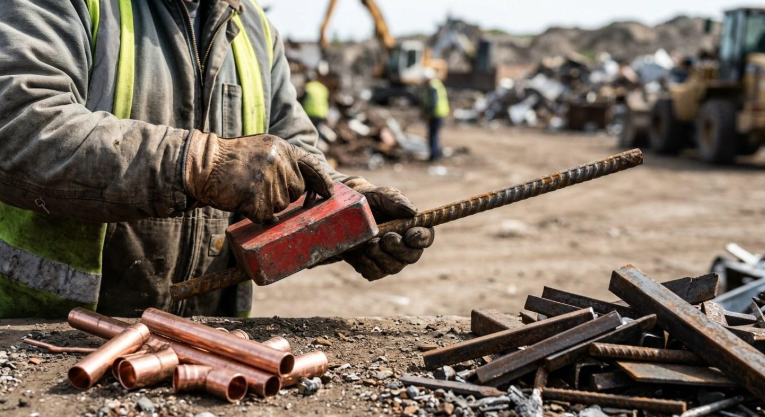
Common ferrous items from a job site include rebar, I-beams, sheet metal, and demolition scrap. Your non-ferrous finds will be things like copper plumbing pipes, aluminum siding, brass fixtures, and electrical wiring. The biggest mistake is delivering mixed or “contaminated” materials. An electric motor, for example, contains a valuable copper core inside a less valuable steel housing. A recycler has to spend labor to separate them, and that cost is passed on to you through a lower price for the entire unit. The more you can separate materials beforehand, the higher your payout.
What Specific Questions Should I Ask a Scrap Yard Before I Arrive?
You should ask about their scale certification, pricing structure for different material grades, and any deduction policies before you haul your material to their facility. A professional operation will have clear, direct answers for all three, as these elements form the basis of a transparent transaction. Vague responses are a significant red flag.
The single most important piece of equipment at any scrap yard is the scale. This is where your material’s value is officially determined. Your first question should always be about its certification. In Georgia, for instance, commercial scales must be tested and certified for accuracy by the Georgia Department of Agriculture’s Weights and Measures Division. Ask to see the certification sticker on the scale itself. It should have a recent date. An uncertified or out-of-date scale means you have no guarantee you are being paid for the correct weight. A reputable yard is proud of its certified equipment and will have no problem confirming it.
Next, get specific about pricing and grading. Scrap prices fluctuate daily with commodity markets, so always call ahead for that day’s numbers. Don’t just ask for the price of “steel” or “copper.” Ask for their price on specific grades you have, such as “HMS #1” (Heavy Melting Steel) or “#2 Insulated Copper Wire.” This shows you’ve done your homework and forces a more precise answer. Ask them to explain their grading criteria. What makes a piece of copper #1 versus #2 in their view? The difference is often the presence of solder, paint, or attachments, and understanding their standards helps you sort better.
❝ The goal of these questions isn’t to be confrontational; it’s to establish a baseline for a professional relationship. A yard that is transparent about its scales, prices, and processes is one that views you as a long-term partner, not a one-time transaction.
Finally, clarify the process for deductions. Ask how they determine tare weight, the weight of your truck, trailer, and any bins, which is subtracted from the gross weight to find your net, payable weight. They should weigh your vehicle both on the way in and on the way out. Also, inquire about their policy for contaminated loads. If your roll-off dumpster of steel contains dirt, wood, or other debris, they will deduct weight. How is that deduction calculated? Is it a visual estimate or a set percentage? A clear, consistent policy is a sign of a well-run yard.
A short phone call covering these points can save you time, fuel, and frustration. Use this checklist to guide your conversation:
| Category | Key Question to Ask | What You’re Looking For |
| Weighing | “Is your truck scale state-certified and when was it last inspected?” | A clear “yes” and a recent inspection date. The scale should have a visible certification sticker. |
| Pricing | “What are your specific prices today for clean aluminum siding and #2 copper?” | Specific, per-pound prices for your sorted materials. Vague answers are a warning sign. |
| Grading | “How do you differentiate between #1 and #2 grade copper at your facility?” | A clear explanation of their sorting criteria (e.g., presence of solder, paint, attachments). |
| Deductions | “What is your policy for deductions on mixed or dirty loads?” | A transparent process for calculating and explaining any weight deductions for contaminants. |
Are Roll-Off Services Worth It for Large Projects?
For large-scale demolition, construction, or industrial clean-outs, a roll-off dumpster service often shifts from a convenience to a financial necessity. The decision hinges on a simple calculation: the cost of your own team’s labor, fuel, and vehicle wear for multiple small trips versus the efficiency of a single, large container managed by a third party. If your project generates enough scrap to fill a pickup truck multiple times a day, you have likely crossed the break-even point where a roll-off saves you money.
Think of it in terms of billable hours. Every hour your crew spends loading a truck, driving to a scrap yard, waiting in line, and returning to the site is an hour they are not advancing the project. These “soft costs” add up quickly. A dedicated roll-off container centralizes scrap collection, keeping the job site cleaner and safer while eliminating the logistical drag of repeated disposal runs. For a demolition contractor clearing structural steel or an HVAC company replacing multiple large rooftop units, the math is straightforward. The value of uninterrupted work on-site almost always outweighs the cost of the container service.
The key is to find a service that matches the pace of your project. A full dumpster sitting on your site for days while you wait for a pickup is a bottleneck. It occupies valuable space and can halt work if it’s the only receptacle for scrap. This is where you need to vet the provider’s operational tempo.
❝ Before committing to a roll-off service, ask one critical question: “What is your typical turnaround time for a swap?” This refers to how quickly they can pick up a full container and replace it with an empty one. A 24-hour turnaround is a good benchmark, but for fast-moving projects, you might need same-day service.
Furthermore, managing the container itself is crucial. On a busy site with multiple trades, an open-top dumpster can quickly become a magnet for general construction debris, wood, drywall, plastic, and other non-recyclable waste. This contamination can lead to significant weight deductions or even rejection of the entire load at the scrap yard. To prevent this, place the container in a designated, controlled area and clearly communicate its purpose to all subcontractors on site. A well-managed container is a profit center; a poorly managed one becomes a costly liability.
See Also: Beyond the Scale: What Really Determines Your Scrap Metal Payout?
Frequently Asked Questions About Scrap Metal
Does anyone collect scrap metal for free? Yes, some services or individuals will pick up scrap metal for free, particularly large items like old appliances. However, this arrangement means you are giving them the material in exchange for the convenience of removal. They keep the full value of the metal when they sell it. If you have a significant quantity, you are almost always better off arranging transport yourself to receive the payment from the yard.
How many pounds of scrap metal does it take to make $100? This amount varies dramatically based on the metal type and fluctuating daily market prices. For a low-value ferrous metal like common steel, you might need well over 2,000 pounds to earn $100. For a high-value non-ferrous metal like clean, bare copper, you could reach that same amount with as little as 25 to 35 pounds. This massive difference is why sorting your metals before you go is so important.
What kinds of metal items are typically not accepted at a scrap yard? Yards reject items that pose a safety hazard or are heavily contaminated with non-recyclable materials. Common rejections include sealed, pressurized containers like propane or oxygen tanks, any item containing liquids like oil or refrigerants, and materials with asbestos. Items that are mostly non-metal, like a television or a computer monitor, will also be turned away. Always call ahead if you are unsure about a specific item.
What do I need to bring with me to get paid? You will need a valid, government-issued photo ID, such as a driver’s license. This is a legal requirement in many states, including Georgia, to help prevent the sale of stolen materials. Also, be prepared for the payment method. Due to state regulations designed to create a paper trail, many yards are required to pay by check rather than cash.
How important is it to clean my scrap metal before bringing it in? Cleaning your metal directly increases its value. “Clean” means removing non-metallic attachments like plastic, wood, insulation, or excessive dirt. For example, a copper pipe with brass fittings and solder will be downgraded to a lower-paying category than a pipe that is pure copper. Taking a few minutes to strip wire or cut off attachments can significantly boost your final payout.
The Bottom Line: From Scrap to Commodity
Ultimately, the difference between a profitable recycling run and a frustrating one is mindset. Viewing your material as a commodity to be sold, rather than as waste to be disposed of, changes every decision you make. The value isn’t just in the metal itself; it is unlocked through careful sorting, cleaning, and a clear-eyed assessment of the yard you choose to partner with. The most significant financial gains are realized before you ever start your truck and drive to the scale.
Every step involves a direct trade-off between convenience and cash. You can toss mixed metals into one bin for speed, but you sacrifice the higher prices paid for separated, clean materials. You can accept a free pickup service, but you forfeit the entire payout. The most successful sellers, from demolition contractors to homeowners, understand this equation. They invest a small amount of labor in preparation and a few minutes of diligence in vetting their buyer to achieve a much higher return.
When you approach a scrap yard, you are not just a customer; you are a supplier. Expect the same professionalism you would in any other business-to-business transaction: certified equipment, transparent pricing, and clear communication. A facility that readily answers specific questions about its scales, grading, and deduction policies is signaling that it operates on a foundation of trust. That transparency is the surest sign you have found a partner who will pay you the true market value for your material.