By an HVAC industry contributor.
When a professional company like Steel T HVAC quotes thousands of dollars for a new furnace and air conditioner, it can feel like a gut punch. It’s easy to look at the price of the equipment online and wonder where the rest of the cost comes from. The truth is, the metal boxes in your closet or on your concrete pad are just one part of a big project for your home. The final price depends on the system’s design, changes to your air ducts, and the cost of skilled workers.
In the Denver area, skilled workers are a big part of the cost. According to the U.S. Bureau of Labor Statistics, workers in the Denver metro area earned an average of $39.28 an hour across all occupations in May 2025, compared with $33.54 nationally. Those higher local wages carry through to the cost of trained experts who know how to properly install and set up new systems. Getting a detailed quote is the first step to understanding these costs. A full quote from a good HVAC team should list the equipment, the work being done, the materials, and any fees for permits.
Quick answer: The price of an HVAC replacement depends more on the system design, how hard the installation is, and the cost of trained, local workers than on the price of the unit itself. Things like your home’s size, insulation, air ducts, and local weather all affect the final cost.


What’s inside
- What Really Determines the Cost of a New HVAC System?
- What Questions Should You Ask a Contractor Before Signing?
- Are High-Efficiency Units Actually Worth the Upfront Cost?
- Frequently Asked Questions
What Really Determines the Cost of a New HVAC System?
The final price is a mix of three main things: the equipment, the skilled workers who install it, and any changes needed for your home.
The furnace or air conditioner is the most obvious cost, but it’s often not the biggest part of the bill. The price of these units depends on their size (called tons for cooling or BTUs for heating), how energy efficient they are, and the technology inside. A simple furnace costs less at first than a high-tech one that gives you better temperature control and saves more energy. However, just picking a unit based on price without having your home checked is a common mistake that can cost you more later.
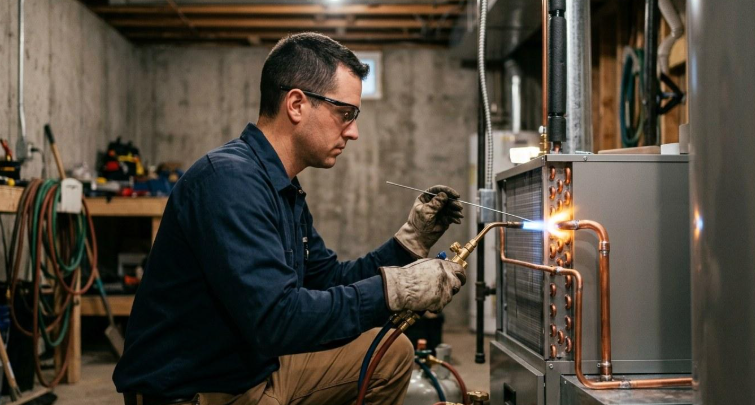
The biggest part of the cost is usually the labor and materials needed to install the system correctly. This isn’t just about connecting the new unit. It includes safely taking out and getting rid of the old system. Old systems often have a chemical called refrigerant that needs to be handled carefully. It also includes putting in new copper pipes, new electrical wires, and a new drain for water. A proper installation requires special tools to connect pipes, test for leaks, and remove all air and moisture from the system before adding the refrigerant. This last step is very important for making the system last a long time and run well.
❝ A good way to estimate the cost is to think of the equipment as 40% of the total price. The other 60% pays for the skilled workers, permits, changes to your ducts, and all the materials like copper pipes, wires, and metal needed to connect everything.
Finally, other costs are related to your home’s unique setup. A new high-efficiency system is only as good as the ductwork it’s connected to. If your air ducts are too small, leaky, or badly designed, the new system won’t work well. A good contractor will check your ducts and suggest fixing or sealing them if needed. This makes sure the cool or warm air gets to your rooms instead of leaking out into the attic or crawlspace. Ask the installer if they will check the “static pressure.” This test makes sure your new system will work well with your existing ducts.
What Questions Should You Ask a Contractor Before Signing?
A good quote comes from a careful look at your home, not just its size. The contractor should give you paperwork showing their calculations, license, and how they plan to do the work.
The single biggest red flag is a bid given over the phone or after a quick walk-through. A professional job starts with a good plan. Ask if the contractor does a “Manual J load calculation.” This is the official industry method to figure out exactly how much heating and cooling your home needs. It looks at things like your windows, insulation, which way your house faces, air leaks, and even the heat from people and appliances. According to the Air Conditioning Contractors of America (ACCA), the group that publishes Manual J, a proper load calculation is required by national building codes and by most states and municipalities. Getting the size right is key for comfort and saving energy. A system that’s too big will turn on and off too often. This wastes energy and doesn’t remove humidity well. A system that’s too small will run all the time and never make your home comfortable.
Next, ask about the qualifications of the workers. A real contractor will be licensed and insured. They should put their license number on the quote. To be extra sure, ask if the technicians are certified. Look for a NATE (North American Technician Excellence) certification. This isn’t just a license. It’s a tough, optional test that shows a technician really knows their stuff and keeps up with training.
Finally, ask for details about the installation and setup process. Will they get a city permit for the job? A permit isn’t just paperwork. It means an inspector will check the work to make sure it’s safe and meets local rules. Also, ask what papers you’ll get when the job is done. A good team will give you a final report. This report shows they checked important things like air pressure and refrigerant levels to make sure the system is running exactly like the maker intended.
❝ Before you sign any contract, make sure you have clear, written answers to these three questions:
❝ 1. Can you provide a copy of the Manual J load calculation for my home?
❝ 2. Are the technicians who will be performing the installation NATE-certified?
❝ 3. Will you pull a permit, and will I receive a commissioning report at the end of the job?
A good quote should be clear and detailed. If it’s vague or only talks about the brand name, it might be missing important information.
| Evaluation Criteria | A Thorough Proposal | A “Red Flag” Quote |
| Sizing Method | Based on a Manual J load calculation. | Based on square footage or old unit’s size. |
| Equipment Details | Lists specific model numbers for all parts. | Uses vague terms like “high-efficiency furnace.” |
| Scope of Work | Lists all work, materials, and duct changes. | A single price with no breakdown. |
| Permits & Codes | Includes the cost of getting a required permit. | Claims a permit is not necessary for the work. |
| Warranty Info | Clearly states manufacturer and labor warranties. | Doesn’t list warranty details in writing. |
Are High-Efficiency Units Actually Worth the Upfront Cost?
Yes, and they offer more than just a lower energy bill. The higher price pays for better technology. This technology makes your home more comfortable and uses less energy over time, as long as it’s installed right.
A standard furnace burns gas to heat a part called a heat exchanger. A fan blows air over this hot part to warm your house. But a lot of heat is wasted as hot gas that goes up a pipe and out of your house. A high-efficiency furnace has a smart design to catch that wasted heat. It has a second heat exchanger that cools the exhaust gas so much that water vapor turns back into liquid water. This process releases extra heat that is then used to warm your home.
See Also: Raising a Series A? Prove Your Market With Outbound First
This design requires two things for installation. First, the exhaust gas is much cooler, so it can be vented outside using a plastic PVC pipe instead of a metal chimney. Second, the water it creates must be drained away safely. These differences in installation are a big reason why high-efficiency models cost more.
❝ How well a high-efficiency system works depends on your whole house. Installing a top-of-the-line furnace in a house with leaky ducts, bad insulation, and old windows is like putting a race car engine in a rowboat. The equipment is only as good as the home it’s in.
For air conditioners, efficiency is measured by a SEER rating. A higher number means less electricity is used to get the same amount of cooling. New high-efficiency air conditioners often have variable-speed parts. This means instead of turning on at full power and then shutting off, they can run at lower speeds for longer times. This keeps the temperature more even and is much better at removing humidity from the air, which makes you feel more comfortable in the summer. The real benefit isn’t just saving money. It’s making your home a more comfortable place to be.
Frequently Asked Questions
How long should a new furnace or air conditioner last? You can typically expect a well-maintained furnace or central air conditioner to last 15 to 20 years. The biggest things that affect how long it lasts are how well it was installed and if you get it checked every year. Systems that are the wrong size or don’t have the right amount of refrigerant will wear out faster.
Should I replace my furnace and air conditioner at the same time? It’s usually a good idea to replace both at the same time. This creates a “matched system.” The parts are designed to work together for the best performance and efficiency. If you connect a new air conditioner to an old furnace with a weak fan, the new unit won’t be as efficient and might not last as long.
What is a heat pump, and does it work in a cold climate? A heat pump is an air conditioner that can also run in reverse to provide heat. In cooling mode, it moves heat from inside your home to the outside. In heating mode, it pulls heat from the outside air and moves it into your home. New heat pumps work even when it’s very cold, but they work less efficiently as the temperature drops. That’s why they are often paired with a gas furnace. The furnace takes over on the coldest days.
What does an annual HVAC tune-up actually include? A good tune-up is more than just changing the filter. A technician should check and clean many parts of the system. This includes cleaning the coils, checking the refrigerant level, testing electrical parts, and clearing the drain line to prevent leaks. These steps help catch small issues before they become major failures.
Is a bigger HVAC system always better? No. This is a common mistake that can cost you money. A system that’s too big will cool or heat your house too fast. It will shut off before it has time to remove humidity from the air, which leaves your home cool but clammy, and the constant starting and stopping wears out parts faster.