By a roofing industry contributor.
A new roof is one of the biggest investments you will make in your home. It comes with a 25 or 30-year warranty, which seems like a long-term promise. Many owners file the paperwork and think the job is done for the next few decades. But this way of thinking can lead to an expensive surprise long before the warranty ends.
The fine print on most warranties shows an important detail: they only cover problems with the materials themselves, not damage from a lack of care. The real threats to your roof’s life are usually not big events. They are small, quiet issues like a cracked seal around a vent pipe, leaves piling up in a roof valley, or a piece of metal flashing lifted by the wind. If you ignore them, these small openings let water leak into the roof deck and frame. This causes rot you can’t see until it becomes a huge problem.
This is the key difference between reacting to problems and preventing them. Instead of waiting for a ceiling stain to show up, a planned approach to commercial roof maintenance focuses on finding and fixing these small weak spots. It is the difference between replacing a $10 seal and replacing thousands of dollars worth of rotted plywood and drywall. Good care makes sure you get the full life out of the roof you paid for.


Quick answer: A roof’s lifespan depends on regular care, not just its warranty. Regular check-ups catch small, cheap problems like failing seals and clogged drains before they cause major water damage. A formal maintenance plan is the best way to prevent a roof from failing too early.
What’s inside
- What Are the Real Costs of Skipping Maintenance?
- How Can You Tell a Proactive Plan from a Sales Pitch?
- What Makes Colorado Front Range Roofs Fail Faster?
- Frequently Asked Questions
What Are the Real Costs of Skipping Maintenance?
Skipping regular maintenance changes your costs from small, planned expenses to huge, surprise repair bills.
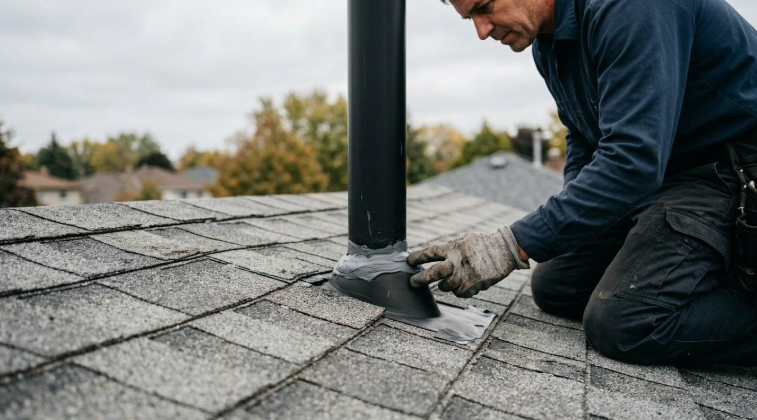
The financial risk comes from how roof problems grow. A major failure rarely happens overnight. It almost always starts as a small, cheap issue. Think about the seal around a plumbing vent pipe. After years of sun and temperature changes, it can dry out and crack. This tiny gap lets a small amount of water seep under the shingles with every rainstorm. You will not see this from the ground, and it will not cause a leak inside right away.
Instead, that water soaks into the wooden roof deck. The wood slowly begins to rot, making it weaker. The dampness spreads to your insulation, making it less effective. This can slowly raise your heating and cooling bills. Only after months or years of this slow damage does the water finally find a way to your ceiling. By then, a simple caulking fix has turned into a project costing thousands of dollars that involves carpenters, roofers, and painters.
❝ Ask any experienced roofer and they will tell you: by the time a homeowner sees a water stain on their ceiling, the repair is often far more expensive than it would have been a year earlier. The stain is the final sign of a much bigger problem deep inside the roof.
This is why regular check-ups are so important. They catch the cracked seal, the lifted flashing, or the debris-filled valley before water can get in and start causing damage. The financial case is clear. While costs vary by area and roof type, the cost difference between preventing problems and reacting to them is huge. A formal maintenance plan also creates a record of care. This can be very important if you ever need to use your warranty with the shingle maker. Without proof of care, your claim for a roof that failed too early might be denied, leaving you to pay the full replacement cost.
How Can You Tell a Proactive Plan from a Sales Pitch?
A good maintenance plan is about a detailed, written process, not just a cheap price for a quick look.
The difference between a contractor who wants to maintain your roof and one who wants to sell you a new one often comes down to paperwork. A real maintenance program creates a history of your roof’s condition. After every visit, you should get a report with a checklist, notes, and dated photos of any problem areas. This paperwork is your proof of care and your early warning system.
A thorough inspection is much more than a quick walk-around. The technician should check the spots that fail most often. This includes checking the flexible seal around every pipe, vent, and skylight. They should inspect all metal flashing in valleys and around chimneys for signs of lifting or rust. On a shingle roof, they will look for heavy granule loss, cracked or curling shingles, and “nail pops,” where nails have started to back out.
❝ When checking a provider, ask what specific safety standards their crews follow. Professional teams follow strict safety rules, like the fall protection rules from the Occupational Safety and Health Administration (OSHA), which require protection at six feet in construction, to protect their workers and your property.
A contractor’s certifications can also show they have better training. Certifications from a specific manufacturer, such as GAF’s Master Elite program, show the team has been trained to install and care for those specific materials. This is especially important for making sure your warranty stays valid.
Use this table to compare what a plan really offers.
| Feature | “Quick Look” Inspection | Detailed Maintenance Visit |
| Documentation | Verbal summary or a simple invoice. | Written report with photos, notes, and a review of its condition. |
| Debris Removal | May clear obvious large branches. | Full clearing of roof surfaces, valleys, gutters, and downspouts. |
| Sealant Check | Cursory glance at visible pipes. | Detailed check of all seals around vents, pipes, skylights, and chimneys. |
| Structural Check | Not included. | Checks for soft spots, loose flashing, and damaged shingles. |
| Outcome | Often just a sales quote for repairs. | A record of your roof’s health and small, preventative fixes. |
Before agreeing to any service, ask these direct questions:
- What kind of written report will I get after each visit?
- How do you document and show me the potential issues you find?
- Are your technicians certified by the company that made my roofing material?
The answers will show if you are being offered a true maintenance partnership or just another sales pitch.
What Makes Colorado Front Range Roofs Fail Faster?
Roofs along the Front Range are worn down by a mix of strong high-altitude sun, bad hail, and big daily temperature changes. These three things work together to wear down roofing materials much faster than in other parts of the country.
The strength of the sun is the first big challenge. At an elevation of 5,000 feet or more, the thinner air filters out less UV radiation. This strong sun exposure dries out the oils in asphalt shingles and breaks down the seals, making them brittle and easy to crack. A seal that might last ten years in a sea-level city can become hard and useless in five to seven years here. This is why checking every seal on the roof is a key part of any local maintenance plan.
Next is the well-known threat of hail. The Front Range is in the heart of “Hail Alley,” and the damage is more than just obvious dents or holes. Hail harms shingles in two main ways: granule loss and bruising. Granule loss scrapes off the gravel-like coating that protects the shingle from the sun. Bruising is a harder-to-see crack in the shingle’s inner layer. It creates a soft spot that lets water seep in over time. This damage is often impossible to spot from the ground.
❝ A common mistake is to think minor granule loss after a hailstorm is just a cosmetic problem. In reality, those granules are the shingle’s main protection from the sun. Once they are gone, the asphalt underneath starts to break down quickly, often shortening the shingle’s remaining life significantly.
See Also: Why Your Next Roof Repair Will Cost More Than You Think
Finally, extreme temperature changes deliver the final blow. It is common for a roof’s surface temperature to swing more than 50 degrees in a single day. This causes materials to expand and shrink quickly, which puts stress on seams and slowly loosens nails. This is made worse by the freeze-thaw cycle in winter. Water that seeps into a tiny crack during the day freezes and expands overnight, widening the gap by force. This cycle also causes ice dams, where melting snow refreezes at the edge of the roof and forces water back up under the shingles.
Frequently Asked Questions
What is the “25% rule” in roofing? This is a guideline used by many insurance companies. It often states that if more than 25% of a single roof section is damaged by something covered, like hail, the insurer should pay to replace the entire section. This avoids a “patchwork” roof with mismatched materials, which could weaken the roof and make it not last as long.
What is the difference between functional and cosmetic damage? Functional damage is any problem that stops the roof from shedding water or shortens its life, such as a hole, a crack, or severe granule loss from hail. Cosmetic damage, like minor scuffs or color changes, does not affect the roof’s performance. Most insurance policies only cover functional damage, making this a very important difference during an inspection after a storm.
Can I perform my own roof maintenance? While you can safely handle tasks on the ground like clearing gutters, getting on a roof without proper safety training and equipment is extremely risky. Also, a professional is trained to spot small signs of trouble, like hail bruising or failing seals around vents, that most people would miss. These hidden issues are often where major leaks begin.
How does a maintenance plan affect my homeowner’s insurance? A written record of professional care can be your best tool when filing an insurance claim. It shows you have taken care of your property. This record helps stop an insurance company from denying a claim by saying the damage was from old wear and tear or neglect, not from a specific storm.
What factors determine the cost of a roof repair? The final price depends on several things besides the size of the patch. Key factors include the cost of matching your current materials, how steep and easy to get to your roof is, and how much damage is underneath. If water has rotted the wooden deck beneath the shingles, that wood must be replaced, which adds a lot to the material and labor costs.
The Bottom Line: Managing Your Roof as an Asset
In the end, the choice is not if you will spend money on your roof, but when and how much. A roof loses value over time. This can be a slow, managed process or a sudden, major failure. A regular maintenance plan puts you in control. It turns surprise emergency repairs into planned, budgeted care. It turns a major risk into a managed part of your home.
When looking at a proposal, the most important question is about paperwork. A verbal summary or a simple invoice is a red flag. A real maintenance program provides a detailed, written report with dated photographs after every visit. This document is not just a receipt. It is your roof’s health history, your proof of care for warranty or insurance, and your early warning system for problems.
Changing how you see your roof, from a simple shield to a system that needs care, is the key to avoiding common and expensive homeowner problems. By catching small issues before they get worse, you are not just fixing a shingle. You are protecting the whole structure underneath and keeping up your property’s value for the long term.